How to Pack a Backpack for Air Travel? Expert Tips
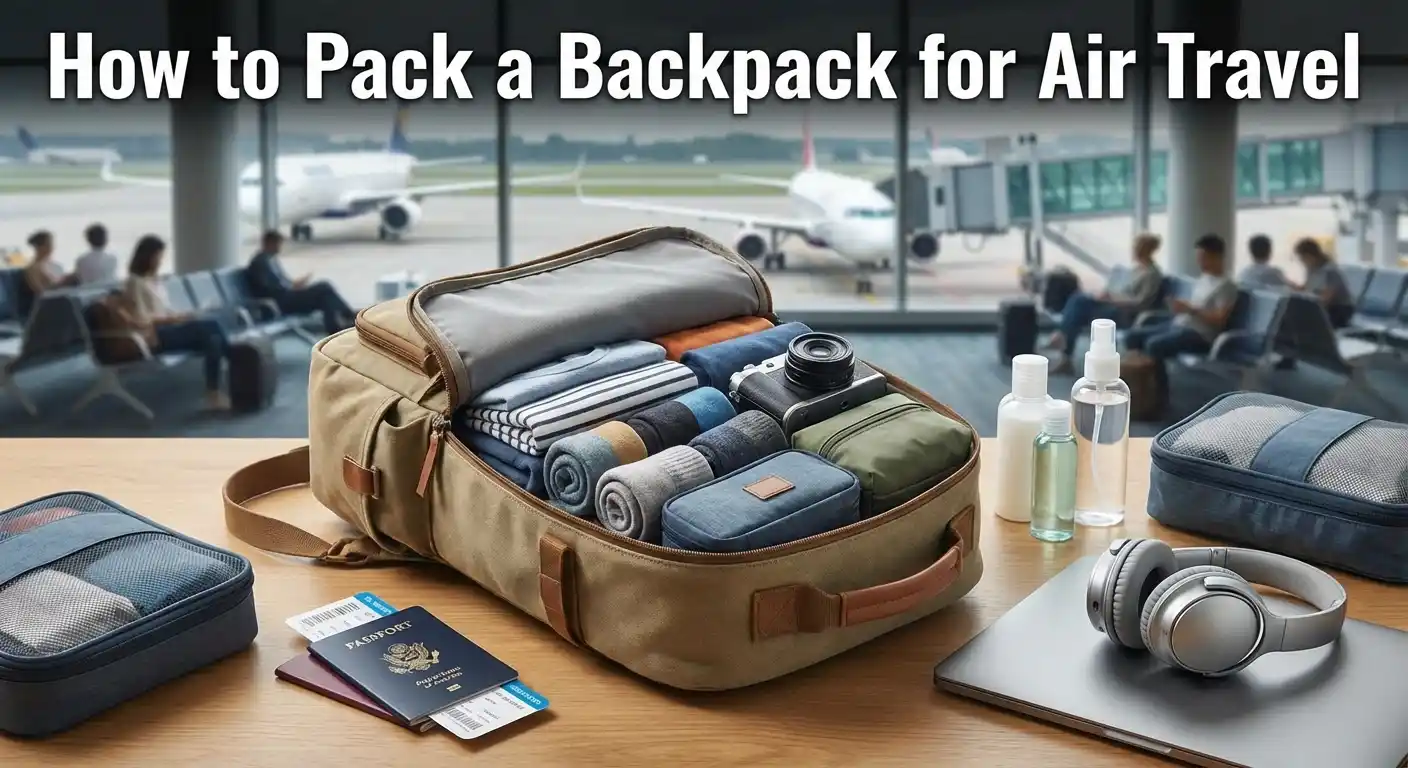
Packing a backpack for air travel can feel overwhelming, especially when you want to bring everything you need without the hassle of heavy, bulky luggage. But what if you could pack smartly, save space, and breeze through security with ease?
This guide is made just for you. You’ll discover simple and proven strategies to organize your backpack efficiently, avoid common packing mistakes, and make sure you have all your essentials at hand.
Keep reading, and you’ll learn how to pack like a pro.
Choosing The Right Backpack
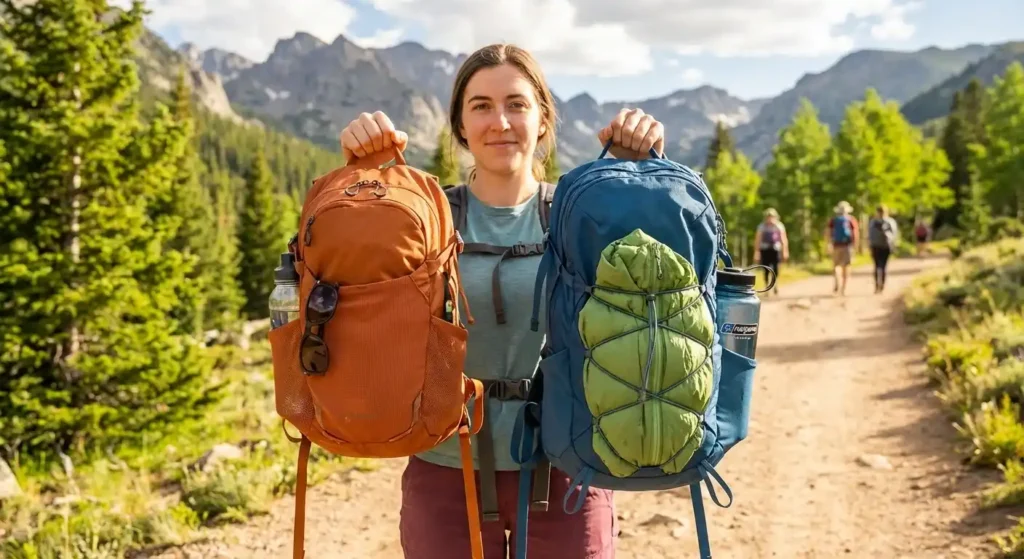
Choosing the right backpack is key for air travel. The size should fit airline rules for carry-ons. A backpack with about 20 to 30 liters capacity works well for most trips. Not too big to carry, not too small to pack essentials.
Comfort matters a lot. Look for padded shoulder straps and a supportive back panel. This helps carry your load without pain. Adjustable straps let you fit the pack snugly to your body.
Security features keep your stuff safe. Backpacks with lockable zippers or hidden pockets add protection. Some even have RFID-blocking compartments to guard your cards and passport from scanners.
Also Read: Two Week Travel Packing List
Planning Your Packing List
A capsule wardrobe helps keep your packing simple and light. Choose clothes in neutral colors that mix and match easily. Pack 3-4 tops and 2 bottoms for a week-long trip. Include a light jacket for cooler weather. Wear your bulkiest shoes and jacket on the plane to save space.
Essentials include passport, ID, boarding pass, and travel insurance. Keep these in an easy-to-reach pocket. Don’t forget medications and basic toiletries. Use small containers to save room and follow airline liquid rules.
Pack chargers, headphones, and adapters in one small pouch. A portable power bank helps keep devices charged. Bring a compact travel pillow and eye mask for comfort on the plane. Use packing cubes to organize tech and accessories neatly.
Also Read: How to Pack a Backpack for Travel?
Packing Techniques
Rolling clothes saves more space than folding. It also helps keep clothes less wrinkled. Folding can create thick layers that waste space.
Packing cubes organize items neatly inside a backpack. They separate clothes by type or day. Cubes make it easy to find things quickly.
To maximize space, put heavier items at the bottom. Fill small gaps with socks or underwear. Wear bulky shoes and jackets on the plane to save room.
| Packing Method | Benefits |
|---|---|
| Rolling Clothes | Saves space, reduces wrinkles |
| Folding Clothes | Easier for thick items, less space efficient |
| Packing Cubes | Organizes items, quick access |
| Space Maximizing Tips | Place heavy items below, fill gaps, wear bulky clothes |
Organizing Inside The Backpack
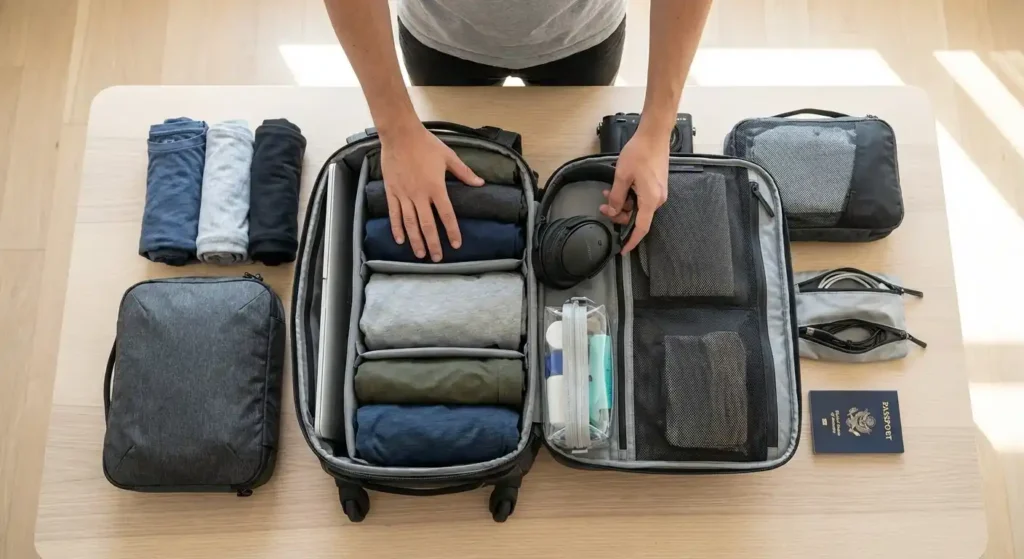
Layering helps keep items easy to reach. Place frequently used things on top. Pack heavier clothes at the bottom. Use soft items like t-shirts to cushion fragile things. This method saves time at security and during the trip.
Keep clean clothes separate from dirty ones. Use zippered bags or packing cubes for this. It stops smells from spreading and keeps your backpack neat. Dirty laundry stays at the bottom or side to avoid mixing.
Liquids must be stored carefully to avoid spills. Use clear, sealed plastic bags. Place them in an easy-to-access spot for security checks. Keep bottles upright and tight to prevent leaks. This protects your clothes and electronics.
Also Read: How to Pack Jewelry for Travel?
Tips For Bulky Items
Wearing heavy clothing on the plane helps save space in your backpack. Bulky jackets and shoes take up less room if worn during travel. This also keeps you warm and comfortable on the flight.
Compressing jackets and shoes is a smart way to fit bulky items. Use compression bags or packing cubes to make jackets smaller. Place shoes inside bags or stuff them with socks to hold their shape and save space.
Choosing lightweight alternatives reduces bulk in your bag. Pick thin, warm layers instead of thick coats. Wear sneakers or sandals instead of heavy boots. This makes carrying easier and leaves room for other items.
Avoiding Common Mistakes
Overpacking is the biggest mistake for air travel. Bulky clothes like jeans and many shoes take much space and add weight. Choose versatile clothes that mix and match easily. Plan your outfits to avoid packing “just in case” items.
Forgetting important items such as chargers, medicines, and travel documents causes stress. Make a checklist and check it twice before leaving. Keep essentials in an easy-to-reach pocket.
Ignoring airline regulations can cause problems at the airport. Check the weight limits and size rules for backpacks. Liquids must be in containers of 100ml or less and packed in a clear bag. Follow these rules to avoid delays or extra fees.
Adjusting For Trip Length And Destination
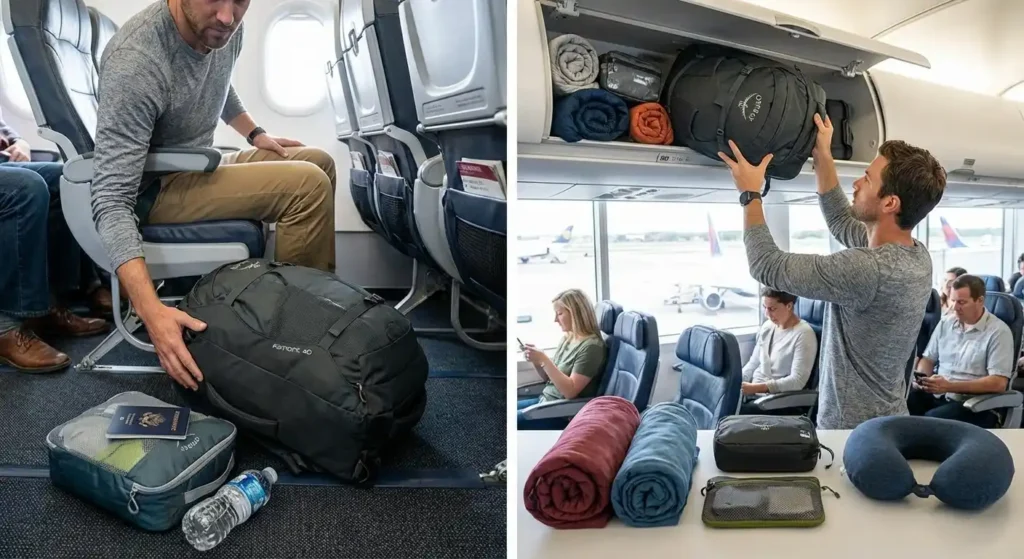
Packing a backpack depends on your trip length and destination. For short trips, pack fewer clothes and only essentials. Choose versatile outfits that mix and match easily. For long trips, pack more layers and extra pairs of shoes.
Weather matters a lot. Bring rain gear if rain is likely. For hot places, pack light, breathable clothes. Cold destinations need warm jackets and gloves.
Cultural and activity needs affect what you pack. Respect local customs by choosing modest clothing if required. Include gear for planned activities, like hiking shoes or swimwear. Always think about what you will do and where you will go.
Final Checks And Tips
Weigh your backpack before leaving for the airport. Airlines have strict weight limits. Use a small scale or a bathroom scale to check. This helps avoid extra fees or repacking at the gate.
Keep important items easy to reach. Place your passport, phone, and boarding pass near the top or in an outer pocket. This saves time during security checks and boarding.
Leave some space for souvenirs or items you might buy during your trip. Avoid packing your bag completely full. A little extra room helps keep your backpack light and flexible.
Frequently Asked Questions
What Is The 5 4 3 2 1 Rule Of Packing?
The 5 4 3 2 1 packing rule means packing 5 tops, 4 bottoms, 3 shoes, 2 accessories, and 1 outerwear piece. It simplifies packing and maximizes outfit options.
What Are The 5 Biggest Packing Mistakes To Avoid?
The five biggest packing mistakes to avoid are overpacking bulky items, not planning outfits, forgetting essentials, poor organization, and ignoring airline rules. Pack versatile clothes, use packing cubes, create checklists, roll clothes, and secure liquids to pack smarter and lighter.
What Is The 3 5 7 Rule For Packing?
The 3-5-7 rule guides packing by suggesting 3 tops, 5 bottoms, and 7 versatile accessories. It simplifies outfit choices and minimizes overpacking.
What Is The 3-3-3 Rule For Packing?
The 3-3-3 rule for packing limits liquids to 3.4 ounces each, 3 containers total, all in one clear quart-sized bag.
Conclusion
Packing a backpack for air travel becomes simple with smart planning. Choose versatile clothes and pack in layers to save space. Wear your bulkiest items on the plane to lighten your load. Use packing cubes to keep things organized and easy to find.
Always double-check your essentials like chargers and documents before you leave. Avoid overpacking by sticking to what you really need. This way, your trip stays comfortable and stress-free. Traveling light lets you move freely and enjoy every moment. Safe travels and happy packing!